|
Compare centralised and decentralised card printing models to determine the right approach for multi-location businesses.
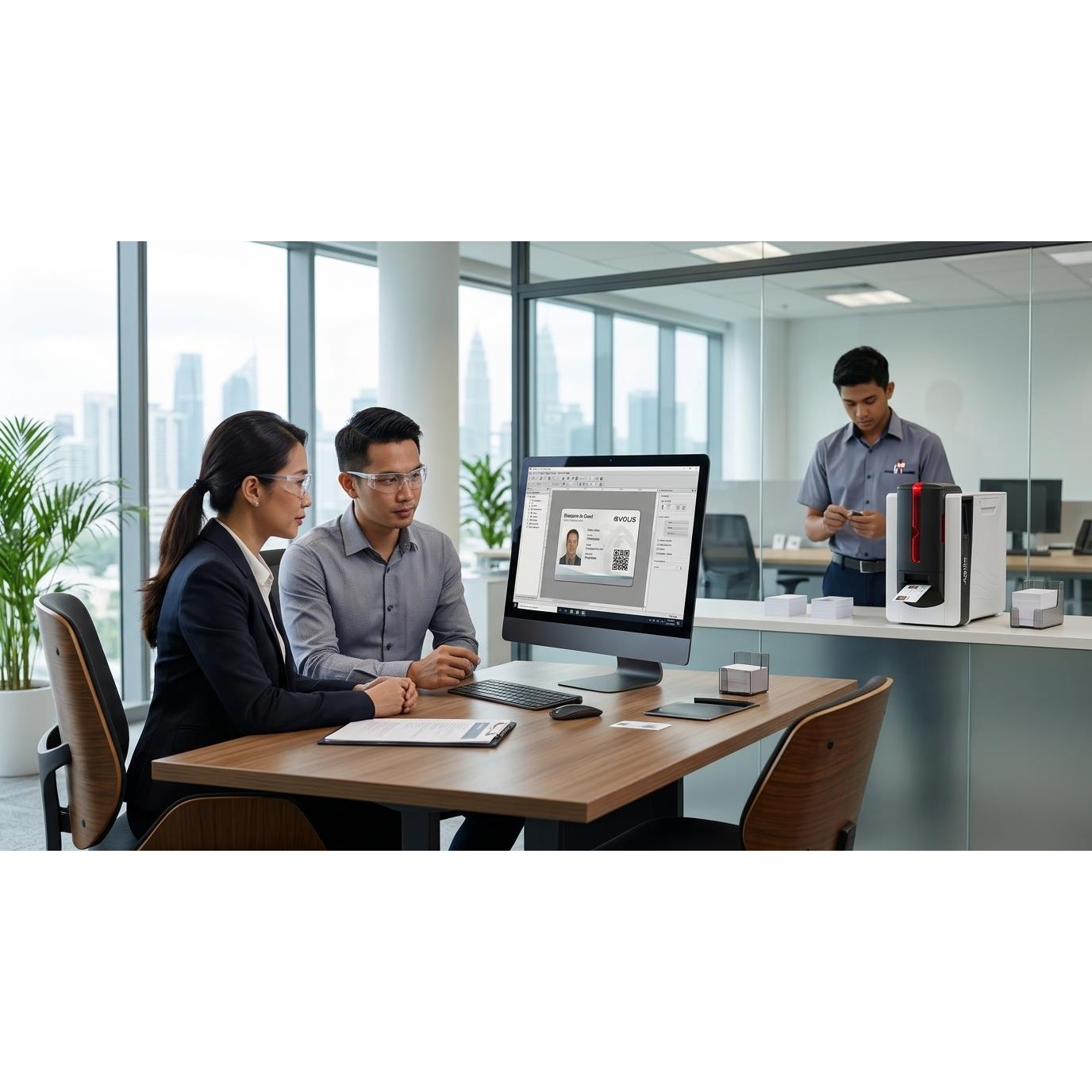 Centralised ID Printing vs Printing at Each Branch: Which Works Better?
🪪 Introduction: Where Should Your Business Print Its ID Cards?
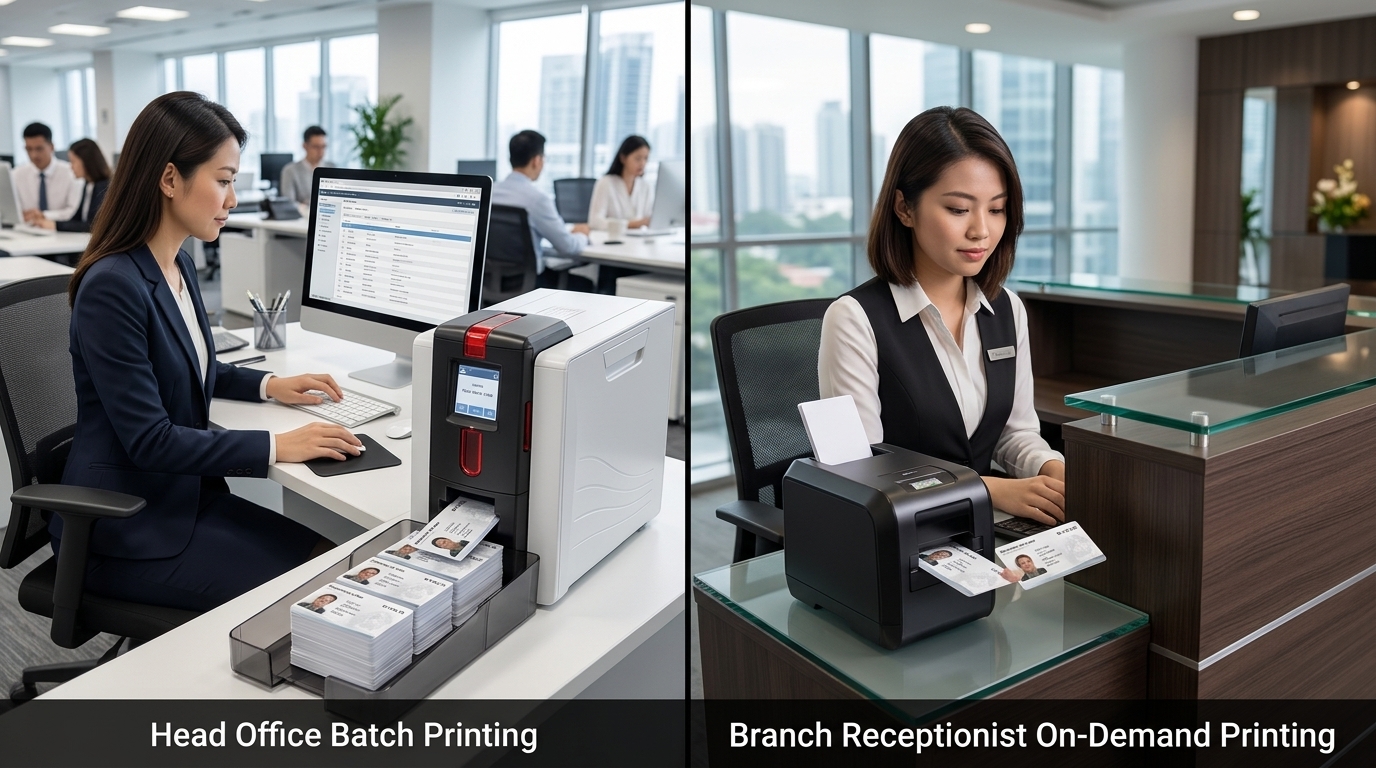
For businesses with multiple offices, factories, schools or retail branches, managing employee ID cards can become challenging.
Should all cards be printed at the head office and distributed to each branch? Or should every branch have its own ID card printer?
Both approaches offer different advantages. Centralised printing provides greater control and consistency, while branch-level printing allows faster local issuance.
The right choice depends on your card volume, operational requirements, security policies and how quickly employees need their cards.
Let's compare both approaches and explore which model works best for your organisation.
🏢 1. Centralised ID Card Printing: One Location, Greater Control
Centralised printing means producing all ID cards at one designated location, such as the head office or HR department.
Branches submit employee information and card requests to the central team, which handles printing and distribution.
Key advantages:
- Consistent card designs and branding across all branches.
- Easier management of printing equipment and consumables.
- Centralised approval and quality control.
- Better coordination of bulk card production.
Potential limitations:
- Cards need to be delivered to individual branches.
- Urgent replacement requests may take longer.
- High request volumes can create a central production backlog.
This approach is suitable for organisations with planned card issuance, centralised HR operations and consistent production requirements.
📍 2. Decentralised ID Card Printing: Print Where You Need It
Decentralised printing allows individual branches or departments to produce their own ID cards using local printing equipment.
For example, a manufacturing facility can issue employee cards locally, while a school can replace damaged student cards without waiting for head office.
Key advantages:
- Faster local card issuance.
- Convenient handling of replacement cards.
- Less dependence on inter-branch delivery.
- Greater flexibility for individual locations.
Potential limitations:
- Additional printer investment across branches.
- More consumables and maintenance arrangements.
- Staff training is required at each location.
- Greater need for standardised printing and security procedures.
This approach works well for businesses with frequent local card requests or geographically dispersed operations.
⚖️ 3. Centralised vs Decentralised: Which Is Better?
Factor
| Centralised Printing
| Decentralised Printing
| Printing location
| Head office
| Individual branches
| Card turnaround
| Depends on processing and delivery
| Faster local issuance
| Design consistency
| Easier central control
| Requires standardised templates
| Equipment
| Concentrated at one location
| Distributed across branches
| Administration
| Managed centrally
| Shared across locations
| Best suited for
| Planned, bulk production
| Frequent local requests
|
What About a Hybrid Model?
Some organisations may benefit from combining both approaches.
For example, head office can manage card designs, approvals and security policies, while selected branches print cards locally.
Smaller branches can continue requesting cards from the central team, while larger locations manage their own printing requirements.
This provides a balance between central oversight and local flexibility.
🖨️ 4. Choosing the Right Evolis Printer
Once your organisation decides where cards will be printed, selecting the right equipment is equally important.
Two Evolis printers worth considering are:
Evolis Zenius 2
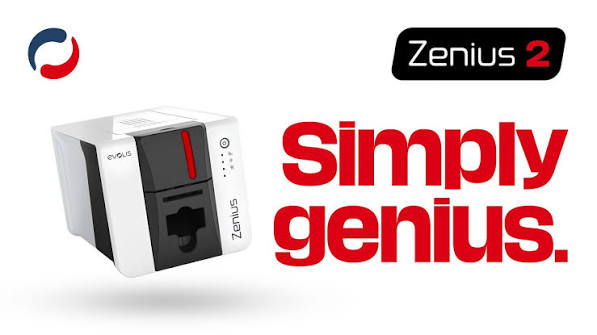
The Zenius 2 is a compact, single-sided card printer designed for small to medium printing requirements.
It is worth considering for:
- Smaller offices and branch locations.
- Employee and visitor ID cards.
- Membership cards.
- Occasional replacement card requests.
Evolis Primacy 2
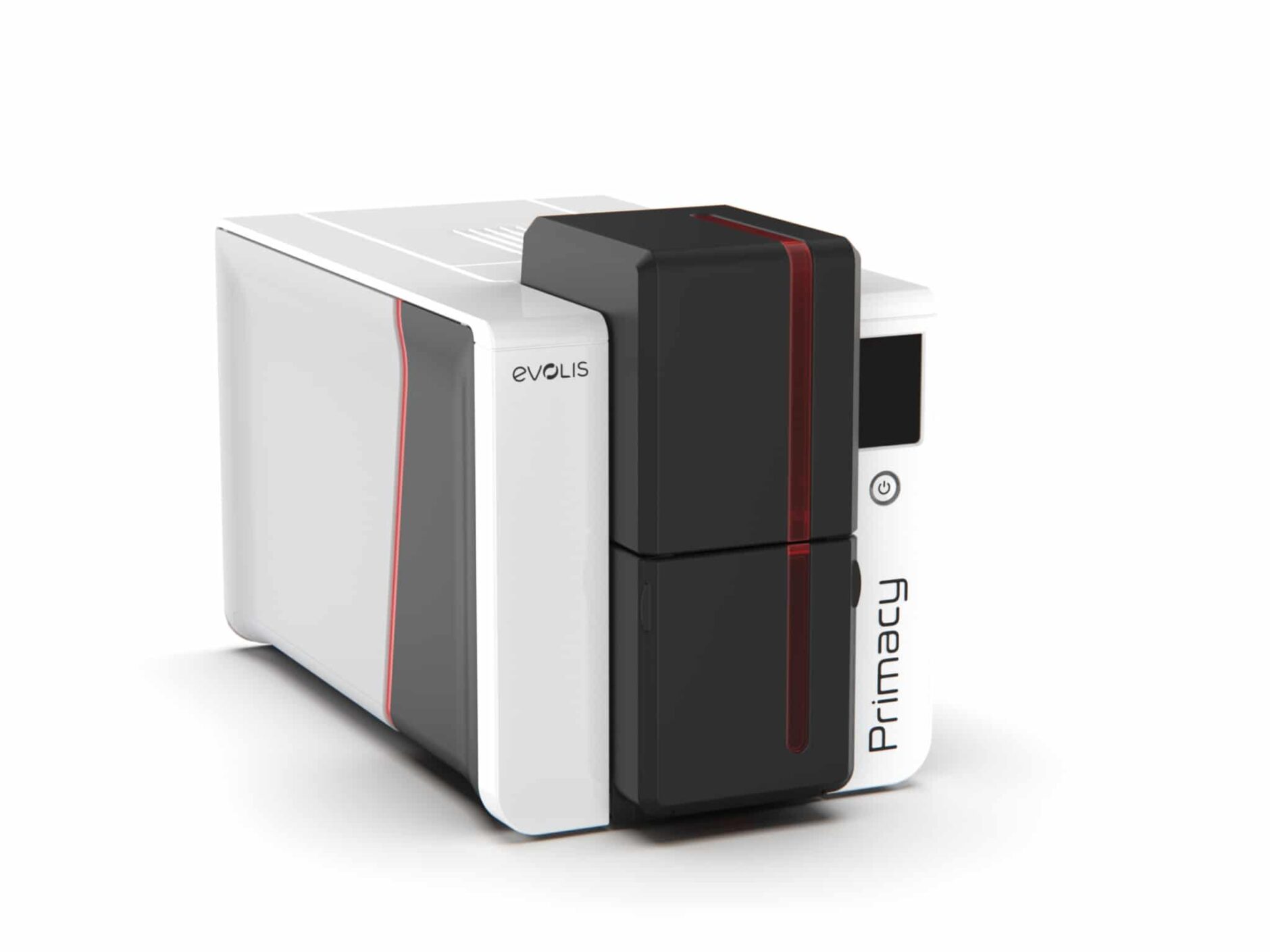
The Primacy 2 is designed for more demanding card-printing requirements and supports single-sided or dual-sided printing, depending on configuration.
It is suitable for considering:
- Centralised employee ID production.
- Larger card issuance requirements.
- Student and corporate identification cards.
- Organisations requiring dual-sided printing.
The important consideration: Choose your printer based on actual card volume, printing requirements and operational needs rather than simply the number of branches.
🔐 5. What Should Businesses Consider Before Deciding?
Before investing in ID card printing equipment, evaluate these five areas:
- Monthly card volume: How many new and replacement cards does each location require?
- Turnaround time: Do employees need their cards immediately or can requests be processed in batches?
- Security: Who is authorised to approve, print and issue cards?
- Operating costs: Consider printers, consumables, maintenance, staff time and delivery.
- Standardisation: Can all branches follow the same card design and issuance procedures?
A small pilot involving the head office and one or two branches can help identify the most practical arrangement before a full rollout.
🚀 Choose the Printing Model That Fits Your Business
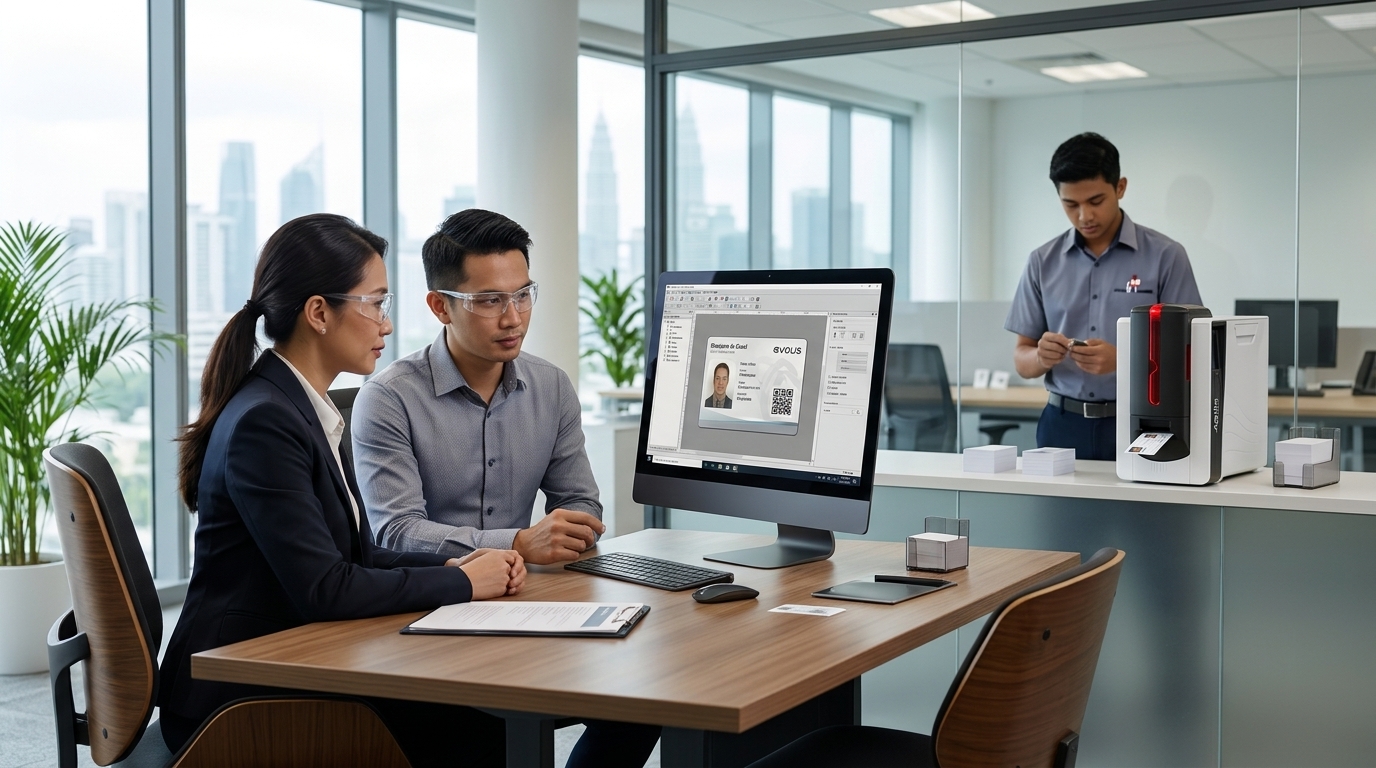
Centralised printing offers greater production control and consistency, while decentralised printing provides flexibility and faster local issuance.
For organisations with multiple locations, a hybrid model may also be worth considering.
Evolis Zenius 2 and Primacy 2 printers offer options for different card-printing requirements, helping businesses establish an ID card issuance process that suits their operations.
Looking to improve your employee ID card printing process?
ALC-TECH can help your organisation explore suitable Evolis card printing solutions in Malaysia.
ALC-TECH (M) Sdn Bhd
WhatsApp: 03-6280 1650
Email: sales@alcaidc.com
Website: www.alcaidc.com
Frequently Asked Questions:
1. What is the difference between centralised and decentralised ID card printing?
Centralised printing produces cards at one main location, while decentralised printing allows individual branches to print cards locally.
2. Is centralised ID card printing cheaper?
It can reduce the number of printers required, but delivery, administration and staffing costs should also be considered.
3. Which Evolis printer is suitable for branch-level printing?
The Evolis Zenius 2 may suit smaller branch printing requirements due to its compact design and small-to-medium production capacity.
4. Which Evolis printer is suitable for higher-volume printing?
The Evolis Primacy 2 is worth considering for more demanding printing requirements, including organisations requiring dual-sided card printing.
5. Can businesses combine centralised and decentralised printing?
Yes. A hybrid model allows head office to manage card standards and approvals while selected branches handle local printing.
Explore More:
Evolis Card Printers:
https://www.alcaidc.com/Public/ProductBranddetail.aspx?brand=EVOLIS
Employee Identification Solutions:
https://www.alcaidc.com/public/solution/IDCardManagementSolution.aspx
ALC-TECH Company Profile:
https://www.alcaidc.com/Public/Brochure/BrochureSolution.aspx
By:
kavi
| Date:
03 Nov2026
|